
EMEND CAPSULE 80 mg
II. INDICATIONS
EMEND is indicated for the prevention of acute and delayed nausea and vomiting associated with initial and repeat courses of:
- highly emetogenic cancer chemotherapy (see DOSAGE AND ADMINISTRATION)
- moderately emetogenic cancer chemotherapy (see DOSAGE AND ADMINISTRATION).
EMEND should be given in combination with a corticosteroid and a 5-HT3 antagonist.
V. CONTRAINDICATIONS
EMEND is contraindicated in patients who are hypersensitive to any component of the product.
EMEND should not be used concurrently with pimozide, terfenadine, astemizole, or cisapride. Inhibition of cytochrome P450 isoenzyme 3A4 (CYP3A4) by aprepitant could result in elevated plasma concentrations of these drugs, potentially causing serious or life-threatening reactions (see DRUG INTERACTIONS – please refer to the Product Insert/Patient Information Leaflet published on HSA for the full drug information).
IV. DOSAGE AND ADMINISTRATION
EMEND (aprepitant) is available as capsules for oral administration.
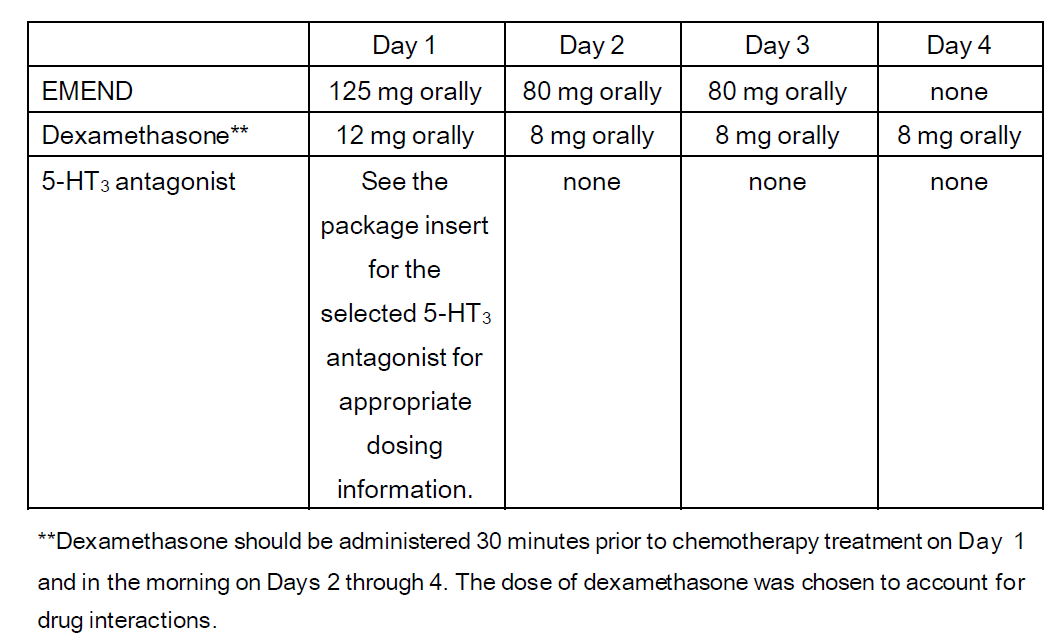
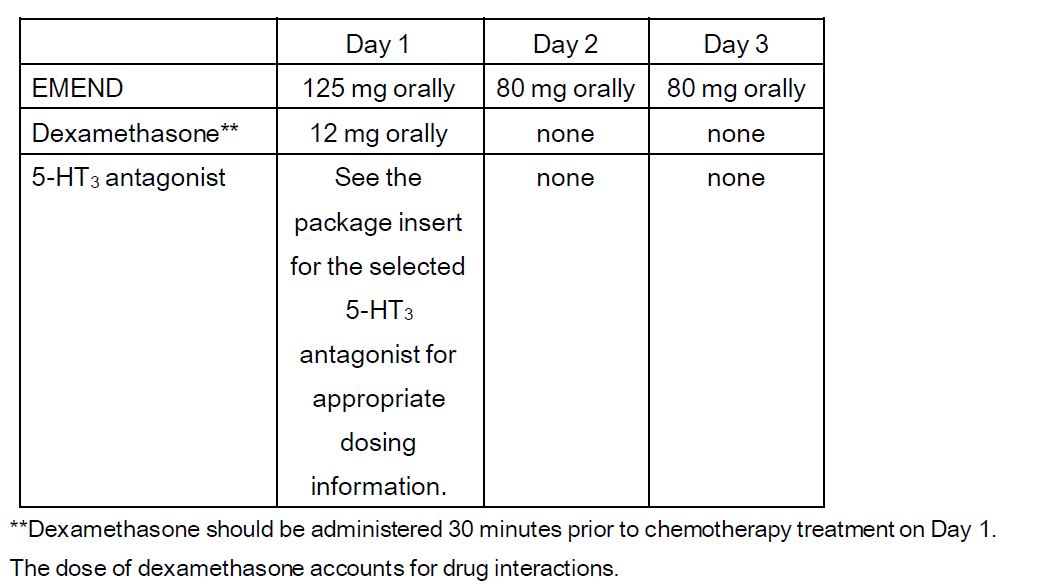
EMEND is given for 3 days as part of a regimen that includes a corticosteroid and a 5-HT3 antagonist. The recommended dose of EMEND is 125 mg orally 1 hour prior to chemotherapy treatment (Day 1) and 80 mg orally once daily in the morning on Days 2 and 3. The package insert for the co-administered 5-HT3 antagonist must be consulted prior to initiation of treatment with EMEND.
EMEND has not been studied for the treatment of established nausea and vomiting.
EMEND I.V. 150 mg (fosaprepitant), a lyophilized prodrug of aprepitant for intravenous administration, is also available. EMEND I.V. 150 mg is available as a single dose and is administered on Day 1 only.
Recommended dosing for the prevention of nausea and vomiting associated with highly emetogenic cancer chemotherapy:
Recommended dosing for the prevention of nausea and vomiting associated with moderately emetogenic cancer chemotherapy:
Chronic continuous administration is not recommended.
See DRUG INTERACTIONS for additional information on the administration of EMEND with corticosteroids – please refer to the Product Insert/Patient Information Leaflet published on HSA for the full drug information.
Refer to the full prescribing information for coadministered antiemetic agents.
EMEND may be taken with or without food.
No dosage adjustment is necessary based on age, gender, race or Body Mass Index (BMI).
No dosage adjustment is necessary for patients with severe renal insufficiency (creatinine clearance <30 mL/min) or for patients with end stage renal disease undergoing hemodialysis.
No dosage adjustment is necessary for patients with mild to moderate hepatic insufficiency (Child-Pugh score 5 to 9). There are no clinical data in patients with severe hepatic insufficiency (Child-Pugh score >9).
